
💬 A Little Something Extra
After last week's local election results, I thought I would fire out a little something that might be of interest to those officers now facing an entirely new political leader

Good day my good friend.
Needless to say that I was not expecting to write this. However, after last Thursday’s local election results and - if I am being quite honest - lot of whining and hand-wringing from far too many people about how it did not go the way they wanted, I thought I would publish something quickly based on some research I did on How To Make Friends And Influence Councillors. In the hope it might be useful.
Oh, and before anyone says anything - I didn’t particularly like the results. But from my experience of working across political parties the overwhelming majority of members of most parties are actually reasonable people even if you disagree with them. So bear that in mind. Anyway.
A change in political control can feel like someone has picked up the council, given it a good shake, and put it back down with all the furniture either in slightly different places, or the whole place is trashed. Depending on your point of view.
For councillors, it is exciting and daunting. They arrive with a mandate, promises to keep, campaign scars still fresh, and a very short window to show that voting for them made a difference. For senior officers, it can be equally challenging. Years of programme development, funding bids, design work, consultation, and carefully balanced stakeholder relationships suddenly have to be reinterpreted through a new political lens.
The temptation, particularly in technical areas like transport, is to think the answer lies in better evidence, better modelling, better design standards or better consultation. All of those matter. But the my research on How To Make Friends and Influence Councillors makes one thing very clear. The most critical factor in making things work is the relationship between senior officers and councillors. Not the committee paper. Not the transport model. Not even the funding agreement. The relationship.
That is not a soft point. It is a delivery point.
The councillors interviewed for my research were blunt about how dependent they are on officers. Officers bring the technical expertise, the knowledge of what is legal, fundable, deliverable and operationally sensible. Councillors bring the democratic mandate, the political direction, the connection to communities, and the judgement about what will or will not survive contact with local politics. Sustainable transport delivery happens best when those two roles are not blurred, but properly connected.
One quote from my research sums it up nicely:
Without my officers I wouldn’t be able to do anything.
Another councillor put it just as clearly:
Senior officers are the people who deliver what we want.
That is the essence of the relationship. Councillors decide the destination. Officers advise on how to get there. The danger comes when either side misunderstands the other.
Officers can sometimes treat political change as an inconvenience to be managed rather than a democratic instruction to be understood. Councillors can sometimes underestimate how long it takes to change strategies, redesign schemes, secure approvals, consult properly and deliver something that will still work in ten years’ time. Newly elected councillors often arrive with big ambitions, only to discover that policy change, scheme development, consultation, funding and implementation can swallow most of a four-year political cycle.
That is why the first few weeks after a change in political control matter so much.
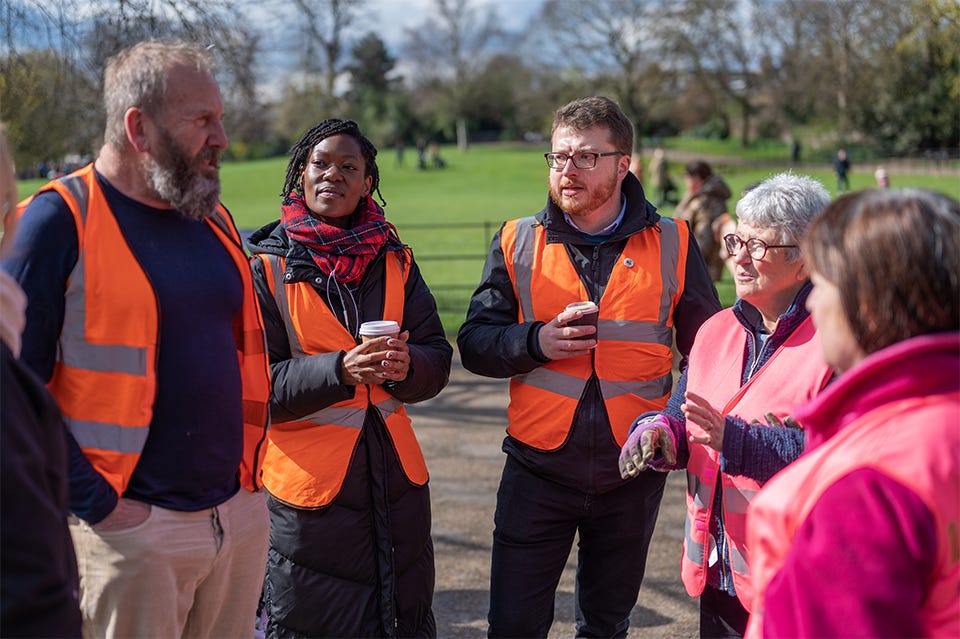

Senior officers do not need to become political. They absolutely should not become partisan. But they do need to become politically literate. There is a difference. Political literacy means understanding the mandate, the personalities, the red lines, the manifesto commitments, the internal dynamics of Cabinet, and the community pressures sitting behind the new administration. My research highlights that Cabinet often operates as the political nervous system of the authority, with major or controversial decisions discussed between Cabinet members long before they appear formally on an agenda. If officers only engage at the formal decision point, they are already late.
Wider research reinforces this. Public acceptability has a demonstrable impact on political decision making, particularly when issues are salient at election time. Controversial transport measures can become more accepted after implementation, but getting to that point requires political confidence, early engagement and a process that people see as fair. My literature review also notes that public opinion, political conflict, media framing and local community networks all shape whether sustainable transport schemes survive.
So, if you are a senior officer facing a new political administration, what should you do now?
1. Start with the manifesto — and say how you will deliver it
This is the big one.
Do not begin with “here is the current programme”. Begin with “here is how we can help you deliver your priorities.”
That does not mean pretending every existing scheme magically fits the new administration’s agenda. It means doing the work. Read the manifesto. Read campaign material. Listen to what the new Leader, Cabinet Member and group have been saying publicly. Then map current programmes, funding commitments, statutory duties and live risks against those priorities.
Senior officers should go into the first serious meeting with a clear, honest delivery note:
These are the commitments we think relate to our service area.
These are the things already in train that support them.
These are the things that may need changing.
These are the quick wins.
These are the difficult trade-offs.
These are the decisions we need from you.
This matters because councillors are judged on delivery. My research found that councillors often see manifesto delivery as the practical expression of their political philosophy. In other words, they may not talk abstractly about ideology, but they care deeply about whether they can go back to voters and say: “we said we would do this, and we did.”
2. Establish the working relationship before the first crisis
The worst time to work out how a Cabinet Member wants to operate is when a scheme has blown up on social media.
Early on, senior officers should have a deliberate conversation about ways of working. How often does the councillor want briefings? What level of detail helps them? What decisions do they want early sight of? What kind of ward issues should be escalated? What does “no surprises” mean in practice?
The report recommends establishing ground rules for engagement in the first meetings, including asking decision makers how they prefer to work and being clear about what officers need from them. That is simple advice, but it is powerful.
This should not be a one-way induction where officers explain the council machine and councillors nod politely. It should be a two-way learning relationship. Officers need to learn the political context. Councillors need to understand legal duties, delivery constraints, funding conditions and technical standards. Done well, this builds trust before trust is tested.
3. Do early political sense-checking
One of the strongest messages in the report is that councillors want to be involved early enough to shape things. They do not want to be presented with a nearly finished scheme and told that changing it now would be expensive, risky or impossible. That is when relationships deteriorate.
For senior officers, this means building political sense-checks into the early stages of policy and scheme development. Not as a way of watering everything down, but as a way of understanding the democratic and community context before too much technical momentum builds.
Ask early:
Does this align with the new administration’s stated priorities?
Which Cabinet colleagues will care about this?
Which ward councillors need early engagement?
What will residents think this scheme is really about?
What is the likely headline?
What are the non-negotiables?
Councillors in my research repeatedly described their value as providing strategic direction and spotting political controversy, such as parking loss, access changes or impacts on local businesses. Officers who use that insight early will avoid wasted work later.
4. Translate technical work into public value
Transport professionals are very good at explaining transport benefits to other transport professionals. That is not enough.
The report found that councillors often wanted officers to make wider policy links much more explicit. This might include health, accessibility, local business, social care, inclusion, town centre vitality and quality of life. Too often, these links are implied rather than clearly stated. Councillors then have to do the translation themselves.
After a change in political control, this becomes even more important. The new administration needs a story it can tell. Not a glossy comms line, but a credible explanation of why a proposal matters to the people they represent.
So instead of saying:
“This scheme improves modal shift and supports LTP objectives.”
Say:
“This will make it easier for children to walk to school, help older residents reach the bus stop safely, support the town centre by improving the street environment, and deliver your commitment to safer neighbourhoods.”
That is not dumbing down. That is doing the job properly.
5. Help the new administration understand the delivery clock
New administrations often have four years, sometimes less, to show progress. Transport schemes, unfortunately, do not care about electoral cycles.
There is a mismatch between political time and delivery time. Changing policy can take years; scheme development can take months or years. Consultation and implementation can land awkwardly close to elections, and controversial schemes need time to bed in before the benefits are widely recognised.
Senior officers should therefore be upfront about the delivery clock. Set out what can be done in 100 days, one year, two years and four years. Separate symbolic early actions from structural reforms. Identify which inherited schemes can be adapted, which should continue, and which genuinely need reconsidering. This is about sequencing ambition so it survives.
The bottom line is that when political control changes, the instinct can be to retreat into process. But process will not carry the day if the relationship between senior officers and councillors is weak.
The report is clear: delivery depends on mutual respect, early engagement, clear language, political awareness and shared ownership of outcomes. Officers do not need to agree politically with the new administration. But they do need to understand its mandate and show, quickly and practically, how they will help deliver it.
Because in local government, especially in transport, the best schemes are not just designed. They are navigated. And the most important navigation tool is the relationship between the people elected to set direction and the people trusted to make it happen.